
7 Reasons Why You Feel Down After the Holidays and How to Recover
By Melody Wright, LMFT
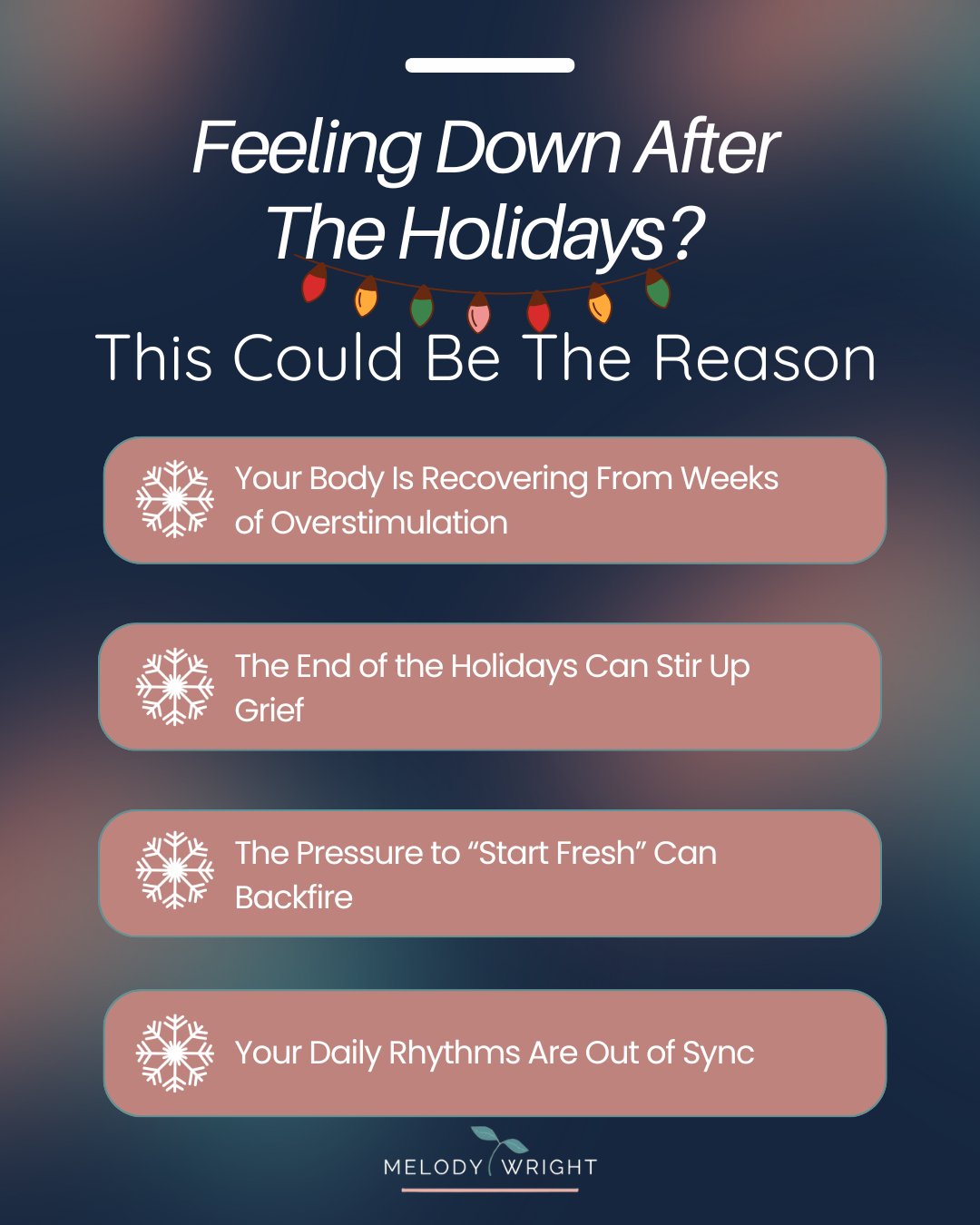
There’s something about the quiet after the holidays that can feel both peaceful and heavy.
The lights come down, the house feels still, and all that energy that carried you through December starts to fade.
You might notice a dip in motivation or find yourself feeling flat, restless, or even a little lost. And you might have caught yourself wondering, Why do I feel this way after such a joyful time?
Many people experience what’s often called the post-holiday slump, which is an emotional crash that follows after weeks of anticipation, connection, and constant stimulation.
After running on adrenaline and social energy, your nervous system is simply recalibrating.
So don’t worry about starting the year off wrong. Instead, remember that you’re actually coming back into the normal rhythm of everyday life.
However, understanding why you feel off can help you meet yourself with compassion instead of pressure.
Here are seven reasons this slump happens and how to recover with gentleness and care.
1. Your Brain Is Coming Down From a Dopamine High
The holidays are filled with anticipation: the planning, socializing, connecting, giving, and receiving. Each of these moments triggers dopamine, the “feel-good” neurotransmitter responsible for motivation and excitement.
When the celebrations end, the dopamine rush fades. Without all the novelty and anticipation, your brain’s reward system quiets down, leaving you feeling emotionally flat or unmotivated.
Therapist Tip: Reintroduce smaller, sustainable forms of pleasure. Seek natural light, move your body, listen to music, or create something. Simple joys help your brain rebalance without overstimulation.
2. Your Body Is Recovering From Weeks of Overstimulation
Even when the holidays are filled with love and joy, they’re also full of stimulation: travel, crowds, sugar, disrupted sleep, and heightened emotion. For weeks, your nervous system has been in “go mode.”
When everything slows down, your body finally has space to process that energy. You might feel exhausted, irritable, or foggy, and it’s not necessarily because something’s wrong, but because your body is trying to return to regulation.
Therapist Tip: Gently regulate your nervous system. Try slow breathing, mindful movement, or grounding exercises that help your body shift from survival to safety.
3. Emotional Whiplash Is Real
Your body keeps track of rhythm and energy, and the holidays can feel like an emotional rollercoaster. Between joy, stress, nostalgia, and sensory overload, your system spends weeks riding emotional highs and lows.
When it’s suddenly quiet, your body doesn’t know what to do with all that leftover energy. You might feel restless, uneasy, or even a little sad, not because anything is wrong, but because your body is trying to find equilibrium again.
Therapist Tip: Let your emotions settle without judgment. Gentle movement, breathwork, or even a slow walk can help your body release stored emotional energy and return to balance.
4. The End of the Holidays Can Stir Up Grief
Even good endings can stir up grief. A new year has a way of making you think about who’s not here, what’s shifted, or what didn’t turn out the way you hoped. For some, being around family or friends can also trigger old emotional patterns that linger after the gatherings end.
What you’re feeling is your body integrating the emotional weight of the season.
Therapist Tip: Let yourself name what you’re feeling, whether it’s sadness, nostalgia, relief, or even emptiness. Acknowledging those emotions allows them to move through instead of getting stuck.
If you’re noticing waves of sadness or reflection surface this time of year, read our blog All About Grief: 6 Ways to Care for Yourself While Grieving

5. The Pressure to “Start Fresh” Can Backfire
The cultural push for “New Year, New You” arrives at the exact time your body is asking for rest. When energy is low, the pressure to set big goals or reinvent yourself can feel discouraging.
Your body doesn’t need a productivity plan; it needs recovery. Pushing for change when your system is tired often leads to burnout before February.
Therapist Tip: Think of January as an integration season. Focus on small, grounding habits, consistent sleep, nourishment, and gentle structure, before chasing new goals.
6. Your Daily Rhythms Are Out of Sync
Holiday schedules often mean staying up later, eating differently, and moving less. Those changes affect hormones, digestion, sleep, and mood, all key parts of emotional regulation.
When your body’s rhythms are disrupted, it can make everything feel just a little harder.
Therapist Tip: Re-establish consistency wherever you can. Go to bed and wake up at regular times, eat balanced meals, hydrate, and get natural light. Routine brings your nervous system back into balance.
If getting back into rhythm feels harder than it should, that’s okay.
You don’t need to overhaul your life; just begin with one small, steady habit at a time.
Read How to Build a Daily Routine to Support Overwhelm for ways to create structure that supports your nervous system and helps you feel more grounded day to day.
7. Your Low Mood Might Be Pointing to Something Deeper
Sometimes what starts as post-holiday fatigue lingers longer than expected. If you notice persistent sadness, loss of interest, or changes in appetite or sleep, it might be more than a seasonal dip.
Therapist Tip: Ask for help. Having support is a way to honor your needs. Therapy can help you understand what your body is communicating and teach tools for grounding and emotional regulation.
At Life By Design Therapy™, our somatic and holistic therapy approach helps clients reconnect to their bodies, regulate their nervous systems, and rebuild emotional balance.
Final Reflections
If you’re feeling off after the holidays, it doesn’t mean you’ve lost your spark; it means your body and mind are finding balance again.
The truth is, we’re not meant to live in constant motion. The quieter pace of the new year isn’t a setback; it’s an invitation, giving you a chance to exhale after the rush, to listen more closely to what you need, and to rebuild your rhythm one gentle step at a time.
Remember to give yourself permission to rest, reflect, and move slowly into what’s next.
Healing and regulation aren’t born from pressure; they grow from presence.
This Week's Affirmations
I am allowed to slow down without losing momentum.
I honor the pace my body needs to recover.
I choose presence over perfection as I move into this new season.
I can hold both gratitude and sadness without judging either.
My body knows how to find its rhythm again.
Additional Resources
**If you’re looking for gentle ways to care for your mind and body as you ease into the new year, these books offer thoughtful insight and comfort.
Wintering: The Power of Rest and Retreat in Difficult Times by Katherine May
Self-Compassion: The Proven Power of Being Kind to Yourself by Kristin Neff
Radical Acceptance: Embracing Your Life With the Heart of a Buddha by Tara Brach
The Power of Now: A Guide to Spiritual Enlightenment by Eckhart Tolle
The Body Keeps the Score: Brain, Mind, and Body in the Healing of Trauma by Bessel van der Kolk M.D
Burnout: The Secret to Unlocking the Stress Cycle by Emily Nagoski and Amelia Nagoski
When the Body Says No: The Cost of Hidden Stress by Gabor Maté
The Untethered Soul: The Journey Beyond Yourself by Michael A. Singer
**Some product links are affiliate links, which means we'll receive a commission if you purchase through our link, at no extra cost to you. Please read the full disclosure here.

